The Importance of Interagency Cooperation in Emergency Management
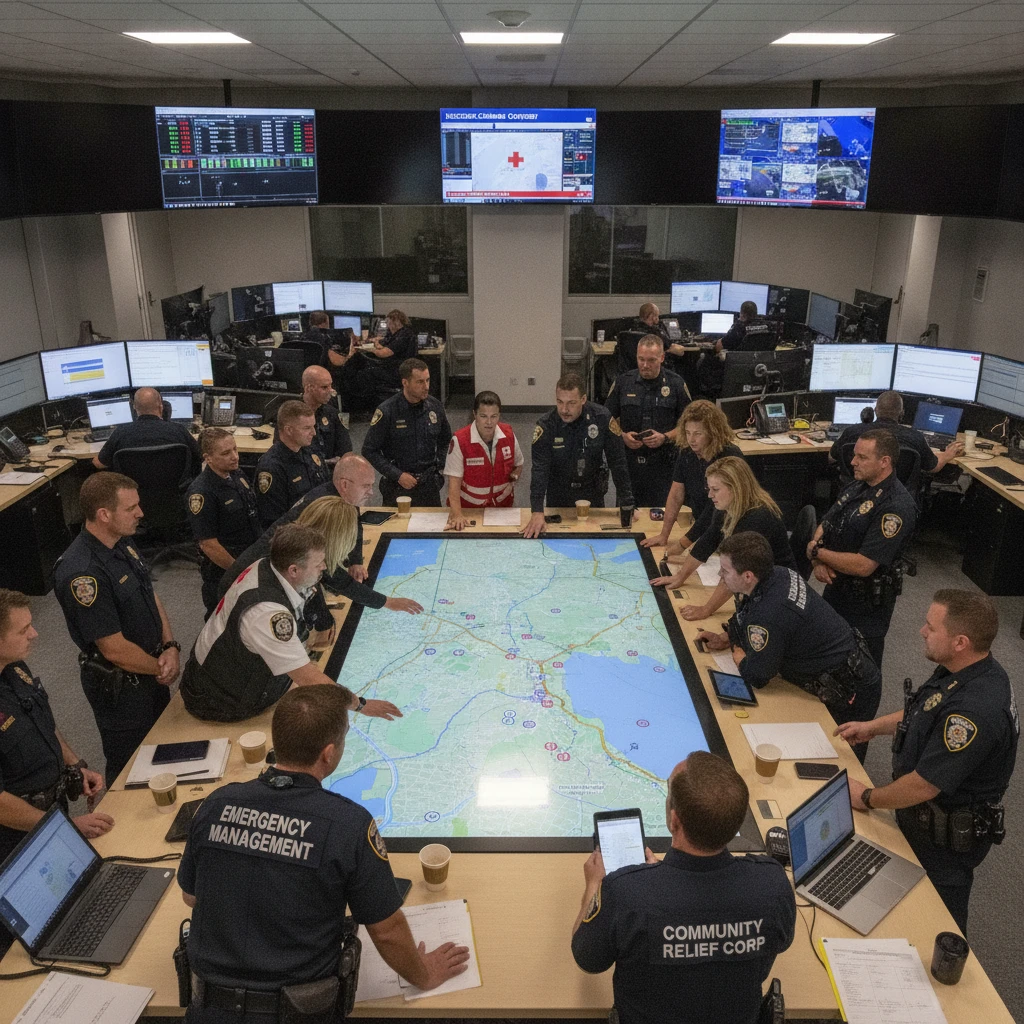
Emergencies rarely fit within one agency’s boundaries. A wildfire, flood, major storm, or transportation incident may require firefighters, law enforcement, health services, local government, nonprofit organizations, and volunteers to act at the same time. Interagency cooperation helps these groups share information, clarify responsibilities, and direct resources toward common priorities.
For people interested in emergency response volunteering, that coordination is especially important. Volunteers can bring valuable local knowledge and practical support, but they are most useful when they work through established organizations and incident leadership rather than acting independently.
What Interagency Cooperation Means in an Emergency
Interagency cooperation in an emergency is the organized effort of multiple agencies and partner organizations to prepare for, respond to, and recover from an incident. Each group contributes its authority, expertise, people, or equipment while working toward shared objectives.
Cooperation does not mean every organization does the same job or gives up its responsibilities. Fire services may handle fire suppression, law enforcement may manage traffic and public safety, and public health teams may assess health risks. Emergency managers connect those efforts through plans, coordination structures, and regular information sharing.
Partners may include government departments, utilities, hospitals, schools, community organizations, and volunteer groups. Their roles can overlap at the edges, particularly when an incident changes quickly. A shared understanding of who is responsible for each task helps prevent duplicated work and missed needs.
Coordination is a working relationship, not a one-time agreement. It begins before an incident with joint planning and training, continues during response through shared procedures, and carries into recovery as agencies address longer-term needs. Community preparedness supports this work by helping residents understand alerts, evacuation routes, and available services.
Why Cooperation Improves Emergency Response
Cooperation improves emergency response by helping organizations make compatible decisions, share timely information, and use available resources where they are most needed. This gives responders and community partners a clearer picture of the incident and its changing priorities.
Information sharing matters because no single team usually sees the whole situation. Fire crews may report a new hazard, public health staff may identify a need for medical support, and local officials may have updates about road closures or shelters. When these reports reach the right partners, leaders can adjust plans with fewer information gaps.
Coordinated planning also helps agencies avoid sending multiple teams to the same task while another area goes without support. Through mutual aid, jurisdictions and organizations can request people, equipment, or specialized capabilities they do not have readily available. Mutual aid is most effective when partners have agreed in advance on how to request help, assign work, and communicate.
Cooperation also supports continuity from response to recovery. For example, a shelter team may identify residents who need medication or accessible transportation. Sharing that information through appropriate channels can help health and human services partners follow up. Information should still be handled carefully, especially when it includes personal or sensitive details.
Coordination cannot remove every delay or solve shortages of staff and equipment. It does, however, give teams a practical way to identify constraints, set priorities, and make decisions with a more complete understanding of the incident.
Who Works Together During an Emergency?
Emergency response brings together public safety agencies, government departments, service providers, nonprofit organizations, and trained volunteers. Which partners take part depends on the incident, its location, and the needs of affected communities.
Public safety agencies commonly include fire and rescue, law enforcement, emergency medical services, and emergency management offices. They may be joined by public health departments, hospitals, public works teams, transportation agencies, and utility providers. These organizations help manage hazards, provide services, maintain essential systems, and support public communication.
Nonprofits and community organizations can help meet needs that fall outside the immediate work of emergency services. Depending on their capacity and agreements, they may assist with shelter operations, food distribution, family support, translation, or donations management. Local knowledge is particularly useful for understanding how an incident affects different neighborhoods and groups.
Volunteer organizations may include community emergency response teams, amateur radio groups, search-and-rescue organizations, and disaster-relief nonprofits. Their training, mission, and authority vary. Volunteers should be assigned work that matches their qualifications and the organization’s role; a willingness to help does not replace required training, supervision, or safety procedures.
Some partners may not deploy to the incident site. They can still contribute through planning, logistics, communications, public information, or services at an emergency operations center (EOC). The goal is to connect the right capabilities to the right needs, not to involve every organization in every operational decision.
How Coordination Works in Practice
Coordination works through shared structures and agreed procedures that help agencies organize decisions, operations, and support. The Incident Command System (ICS), unified command, emergency operations centers, and mutual aid each serve a distinct purpose.
Incident Command System and unified command
The Incident Command System is a standardized approach for organizing incident management. It provides defined roles, a manageable chain of command, and a common way to set objectives and communicate assignments. Agencies can use ICS for incidents of different sizes, adjusting the organization to match the situation.
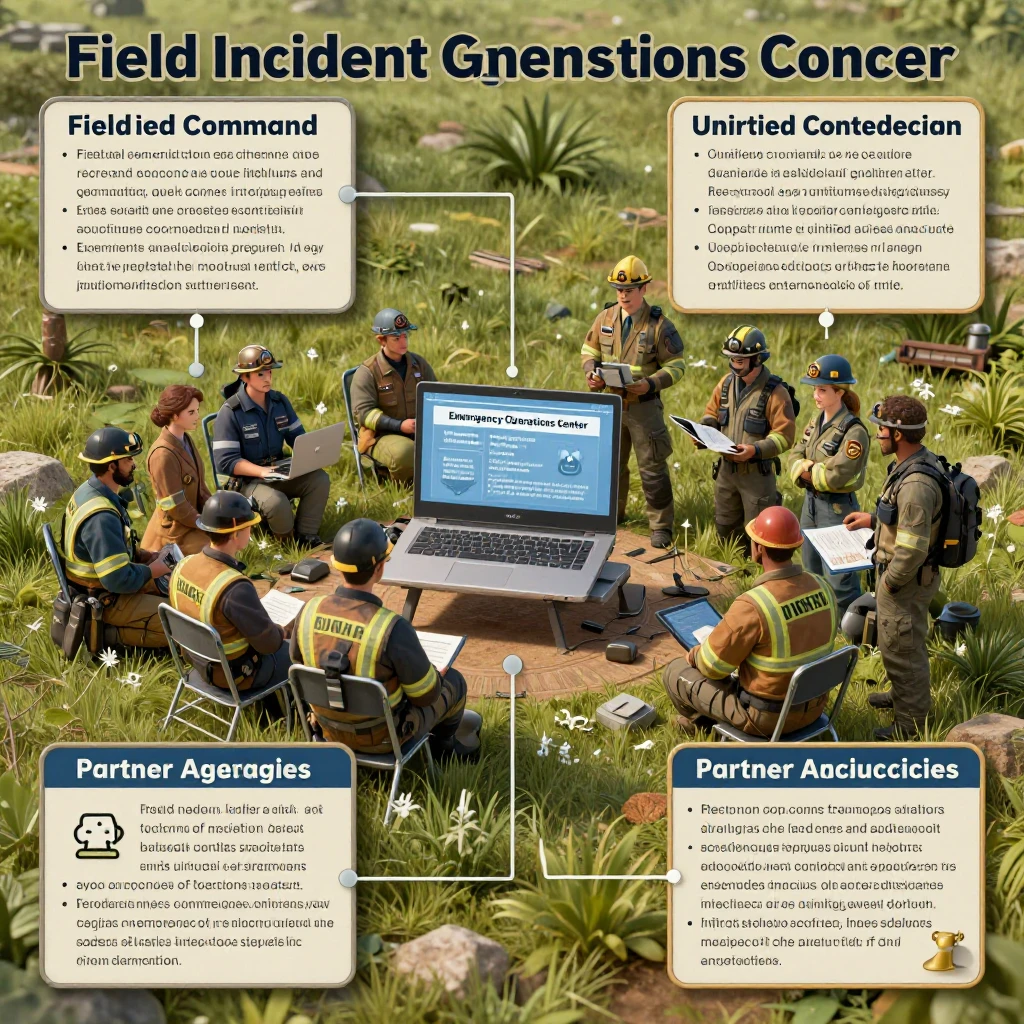
When two or more agencies have authority or responsibility for an incident, they may establish unified command. Agency representatives agree on shared objectives and priorities while each retains its legal authority and internal responsibilities. Unified command supports joint decisions; it does not mean every operational choice requires a meeting of all partners.
Emergency operations centers and mutual aid
An emergency operations center supports incident response by helping coordinate information, policy decisions, and resources across organizations or jurisdictions. The EOC generally works alongside incident command rather than replacing it. Field leaders manage tactical operations, while the EOC can help resolve broader resource and coordination needs.
When local capacity is stretched, mutual aid lets an agency request assistance from partners under established agreements. Clear requests should identify the capability needed, where and when it is required, and who will receive and supervise the resource. Shared training and plain-language communication make these arrangements easier to use under pressure.
Common Challenges and How Teams Can Address Them
Interagency coordination often struggles when teams use different communication habits, do not understand one another’s responsibilities, or follow procedures that do not align. Joint planning, clear roles, and regular practice can reduce these problems before an emergency.
- Communication gaps: Agencies may use different radio systems, terminology, or reporting routines. Agree on primary and backup communication methods, use plain language, and set a schedule for briefings and situation updates.
- Unclear responsibilities: Partners may assume another organization is handling a task. Document lead and support roles in plans, name points of contact, and confirm assignments during briefings.
- Incompatible procedures: Differences in forms, resource requests, or volunteer check-in can slow work. Identify the most important shared procedures, train on them together, and keep quick-reference guides available.
- Changing conditions: Plans can become outdated as hazards move or needs shift. Use a common reporting process, state what is known and uncertain, and update priorities when new information changes the picture.
Exercises help reveal coordination problems in a low-risk setting. A short tabletop exercise can test how partners would request shelter support, share a road closure, or bring in mutual aid. Afterward, record specific improvements, assign owners, and revisit them during the next planning cycle.
Technology can help teams share updates, but it is not a substitute for agreed procedures or personal relationships. Systems may fail, staff may change, and connectivity may be limited. Maintaining a workable backup process is part of preparedness.
The Role of Emergency Response Volunteers
Emergency response volunteers contribute safely and effectively when they join an established organization, follow incident leadership, and accept assignments suited to their training. Their local knowledge, time, and specialized skills can extend community capacity without bypassing professional coordination.
Before an emergency, prospective volunteers can identify a recognized local program, learn its eligibility and training requirements, and keep contact details current. Depending on the group, preparation may include first aid, radio procedures, disaster services, or basic incident command concepts. Volunteers should also understand how the organization handles deployment, supervision, and personal protective equipment.
During an incident, volunteers should check in through their organization or designated staging process, receive a clear assignment, and report hazards or changing conditions to their supervisor. They should not self-deploy, enter restricted areas, or accept tasks beyond their training. These limits protect volunteers and prevent incident leaders from losing track of people and resources.
After deployment, volunteers should follow demobilization instructions, return equipment, and share relevant observations through the reporting chain. Debriefing can surface practical lessons, such as a confusing check-in point or a communication issue that needs attention before the next response. Reliable volunteers strengthen the system by working within it.
Frequently Asked Questions
What is interagency cooperation in emergency management?
Interagency cooperation is the coordinated work of multiple agencies and organizations before, during, and after an emergency. Partners share information, clarify responsibilities, and align resources while retaining their own roles and authority.
How does the Incident Command System support coordination?
ICS gives responders a common structure for organizing roles, setting objectives, assigning tasks, and sharing information. When agencies have overlapping authority, unified command can help them agree on shared incident objectives.
How can volunteers join a coordinated emergency response?
Volunteers can contact a recognized local volunteer organization or emergency management program, complete its screening and training, and follow its deployment procedures. They should never self-deploy or work outside their assignment and training.
What makes cooperation between agencies difficult?
Different communication systems, unclear responsibilities, incompatible procedures, and rapidly changing conditions can make cooperation difficult. Joint planning, shared training, clear contact points, and backup communication processes help teams address these barriers.
Strong interagency cooperation depends on preparation as much as action. When agencies and volunteer partners understand their roles, practice communicating, and share information through reliable channels, they are better positioned to work toward the same community priorities during an emergency.