Essential Skills Every Volunteer Emergency Responder Should Master
Volunteer emergency responders form the backbone of community resilience. When a wildfire jumps a containment line, a flash flood cuts off a neighborhood, or a mass casualty event overwhelms professional services, trained volunteers are often the first capable hands on scene. But capability doesn't come automatically with a good heart and a willingness to help. It comes from deliberate, structured skill development — and knowing exactly which skills to prioritize.
This guide covers the essential competencies every volunteer responder should build, whether you're just exploring your first CERT training or looking to sharpen specific gaps in your existing knowledge.
Why Skill Development Matters for Volunteer Responders
Untrained or undertrained volunteers can inadvertently create secondary hazards at an emergency scene — slowing professional response, endangering themselves, or worsening victim outcomes. Skill mastery isn't about credentials for their own sake; it's about being genuinely useful when conditions are worst.
Community emergency response teams operate most effectively when every member understands their role and can execute it without hand-holding. A single volunteer who freezes during triage, misuses PPE, or transmits garbled radio traffic can disrupt an entire operation. Conversely, a well-prepared volunteer multiplies the capacity of the whole team.
The skills covered below aren't advanced specializations — they're the baseline. Think of them as the minimum viable competency set for anyone showing up to an active incident.
First Aid, CPR, and Basic Medical Response
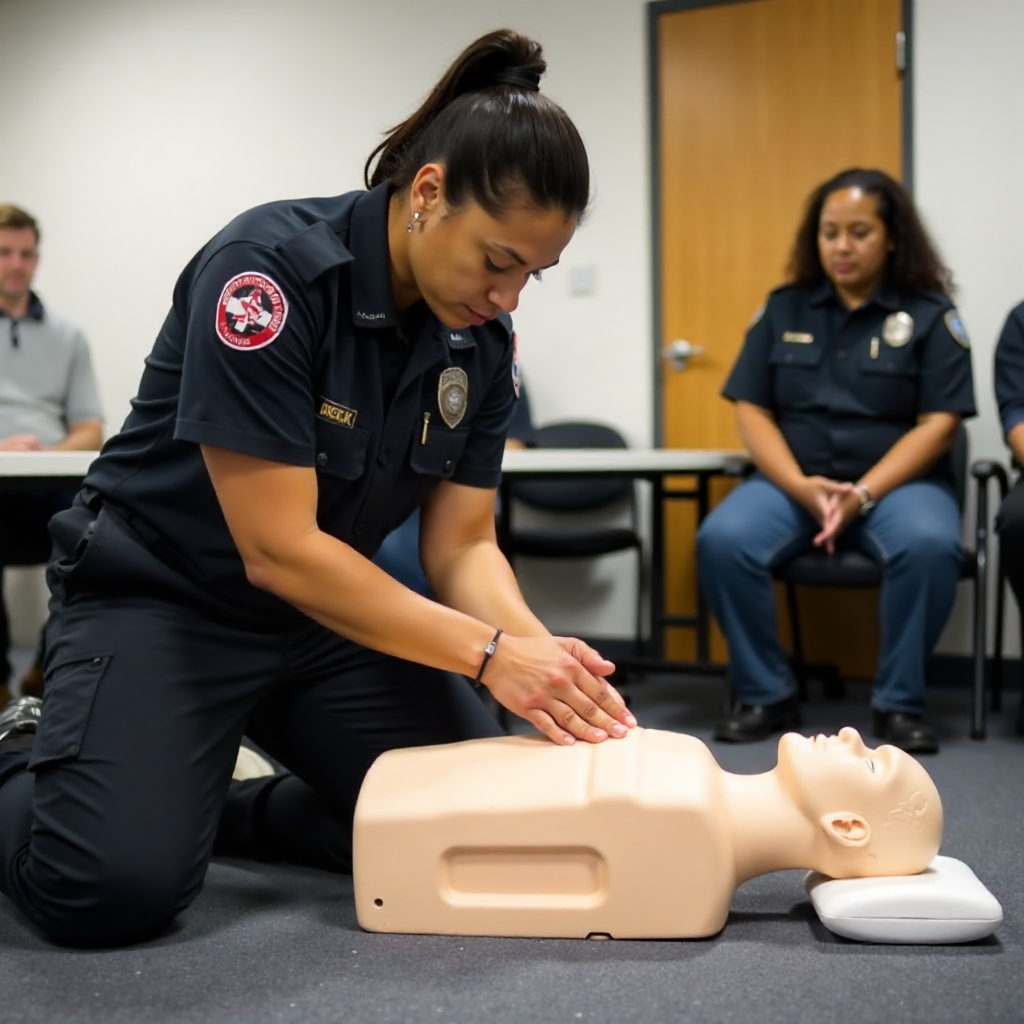
First aid and CPR certification are the non-negotiable starting point for any volunteer emergency responder. These skills directly determine whether a victim survives the first minutes of a medical emergency before professional EMS arrives.
CPR proficiency matters more than most people realize. Bystander CPR can double or triple survival rates in cardiac arrest — but only when performed correctly and started quickly. Volunteers should hold current certification from a recognized body such as the American Red Cross or American Heart Association, and recertify every two years as guidelines evolve.
Beyond CPR, foundational medical response includes:
- Controlling severe bleeding using direct pressure and tourniquets
- Managing airway obstructions and positioning unconscious patients safely
- Recognizing signs of shock, stroke, and diabetic emergencies
- Using an automated external defibrillator (AED)
- Basic wound care and fracture stabilization
Triage and patient assessment build on these basics. In a multi-victim scenario, responders must rapidly sort patients by severity — identifying who needs immediate intervention versus who can wait. The START (Simple Triage and Rapid Treatment) method is the standard framework used in most community response programs and takes only a few hours to learn at a basic level.
Understanding the Incident Command System (ICS)
The Incident Command System is the organizational framework that coordinates emergency response across agencies, jurisdictions, and volunteer groups. Every volunteer responder needs to understand ICS — not because they'll be running it, but because they need to function within it.
ICS establishes a clear chain of command, standardized terminology, and defined roles that prevent the chaos of multiple groups operating independently. When a volunteer arrives on scene and doesn't know who to report to or what their span of control is, they become a liability rather than an asset.
FEMA's free online ICS courses — particularly IS-100 and IS-700 — provide the foundation most volunteer programs require. These courses cover:
- The five major functional areas: Command, Operations, Planning, Logistics, and Finance/Administration
- How to receive and confirm assignments from a supervisor
- Unified command structures used in multi-agency responses
- Documentation and resource tracking basics
Knowing your place in the ICS structure isn't a bureaucratic formality. It's what allows 50 volunteers from different organizations to work alongside professional firefighters and law enforcement without creating confusion. The system works precisely because everyone uses the same language and follows the same reporting structure.
Communication Skills and Field Protocols
Clear communication is what keeps an emergency response from collapsing into noise. Volunteers who can't relay information accurately — or who clog radio channels with unnecessary transmissions — degrade the entire operation.
Radio communication follows specific protocols for good reason. Plain-language protocols have largely replaced 10-codes in most jurisdictions because plain language reduces misunderstanding across agencies. A volunteer should know how to:
- Identify themselves and their location before transmitting
- Keep transmissions brief and structured (who, what, where)
- Confirm receipt of instructions by repeating key information back
- Recognize when NOT to transmit (during priority traffic)
Beyond radio, the chain of command in communication matters as much as the content. Volunteers report to their immediate supervisor — not directly to incident command, not to media, and not to curious bystanders. Bypassing the reporting chain, even with good intentions, creates information gaps that affect decisions made higher up.
Situational reporting is a skill in itself. A good field report answers: what you observed, how many people are affected, what resources you have, and what you need. Practicing this structure during drills makes it automatic under pressure.
Search, Rescue, and Scene Safety Fundamentals
Search and rescue operations require a specific mindset before any physical action: scene safety first. A responder who becomes a secondary victim helps no one. Assessing hazards — structural instability, gas leaks, downed power lines, crowd behavior — before entering a scene is a trained reflex, not an instinct.
Basic SAR skills for community volunteers typically include:
- Systematic search patterns for locating missing persons in a defined area
- Light rescue techniques for moving or extricating trapped individuals
- Cribbing and shoring fundamentals for stabilizing debris
- Victim packaging and safe carry/drag techniques
Personal protective equipment selection and proper use is inseparable from scene safety. The right PPE depends on the hazard: structural collapse requires helmets and gloves; hazmat situations require respiratory protection and chemical-resistant suits. Wearing the wrong gear — or wearing the right gear incorrectly — provides false confidence without actual protection.
CERT training programs typically cover light search and rescue as a core module, giving volunteers hands-on experience with these techniques in controlled environments before they're needed in real ones. You can find more about CERT training requirements through FEMA's official CERT program page.
Situational Awareness and Decision-Making Under Pressure
Situational awareness — the ability to accurately perceive what's happening around you and anticipate what's likely to happen next — is arguably the skill that separates effective responders from dangerous ones. It can't be bottled into a checklist, but it can be trained.
In emergency environments, conditions change fast. A building that was stable two minutes ago may now be compromised. A crowd that was cooperative may turn hostile. A patient who was breathing may have stopped. Responders who are locked into a single task without scanning their environment miss these shifts until it's too late.
Developing situational awareness involves:
- Continuously scanning for new information rather than fixating on one element
- Asking "what has changed?" every few minutes during an extended incident
- Communicating observations to teammates and supervisors even when unsolicited
- Recognizing personal stress responses that narrow attention (tunnel vision, fixation)
Decision-making under pressure improves with realistic scenario training. Tabletop exercises and live drills that introduce unexpected complications — a simulated victim who deteriorates, a resource that becomes unavailable — build the mental flexibility that real incidents demand. The goal isn't to eliminate uncertainty; it's to act effectively despite it.
Psychological First Aid and Responder Self-Care
Psychological first aid (PFA) is a structured approach to supporting people in the immediate aftermath of a traumatic event. It doesn't require a mental health background — it requires presence, practical support, and knowing what not to say.
Volunteers regularly encounter people who are terrified, grieving, disoriented, or in shock. A responder who responds to emotional distress with clinical detachment or, worse, dismissiveness, can deepen harm. PFA principles teach responders to:
- Make contact in a calm, non-intrusive way
- Provide safety, comfort, and practical information
- Connect survivors with additional support resources
- Respect individual coping styles without forcing disclosure
The other half of this section is often overlooked: responder self-care. Volunteer emergency responders are exposed to traumatic events repeatedly, often without the institutional support structures that professional first responders have access to. Cumulative stress, secondary trauma, and burnout are real risks — and they compromise both the responder's wellbeing and their effectiveness in the field.
Healthy habits between deployments — adequate sleep, peer debriefing, knowing when to step back — aren't soft add-ons to the job. They're operational necessities. A burned-out volunteer who shows up to an incident emotionally depleted is not a resource; they're a risk.
Frequently Asked Questions
Do volunteer emergency responders need formal certification to participate?
Most organized volunteer programs require at minimum a basic first aid and CPR certification, and many require completion of ICS-100 and IS-700 courses before field deployment. Requirements vary by program and jurisdiction, so check with your local CERT coordinator or emergency management office for specifics.
How long does it typically take to develop the core skills covered in this article?
A motivated volunteer can complete foundational training — CPR certification, basic ICS courses, and a CERT program — in roughly 40 to 60 hours of combined coursework and drills spread over a few weeks. Ongoing skill maintenance and scenario-based practice continue well beyond that initial period.
What is the difference between a CERT volunteer and a professional emergency responder?
CERT volunteers are community members trained to assist during disasters when professional responders are overwhelmed or unavailable. They operate under professional supervision and are not substitutes for firefighters, paramedics, or law enforcement. The distinction matters for scope of practice — CERT volunteers work within defined limits that protect both them and the people they're helping.
Can volunteers with no prior experience still be effective responders?
Yes — with proper training. Prior experience in healthcare, military, or public safety is helpful but not required. CERT and similar programs are specifically designed to bring community members with no background up to a functional level of competency. Attitude, reliability, and willingness to train consistently matter more than prior credentials.
How often should volunteer responders refresh or update their training?
CPR and first aid certifications typically require renewal every two years. ICS knowledge should be refreshed when significant guideline updates occur. Most experienced responders recommend participating in at least one realistic drill or exercise per year to keep skills sharp and identify gaps before an actual incident exposes them.